
Thread Lift Trends in 2026: How Modern Techniques Are Changing Non-Surgical Facial Rejuvenation
From advanced thread materials to personalized facial contouring, discover what's changing in modern thread lifting, and what these innovations really mean for patients.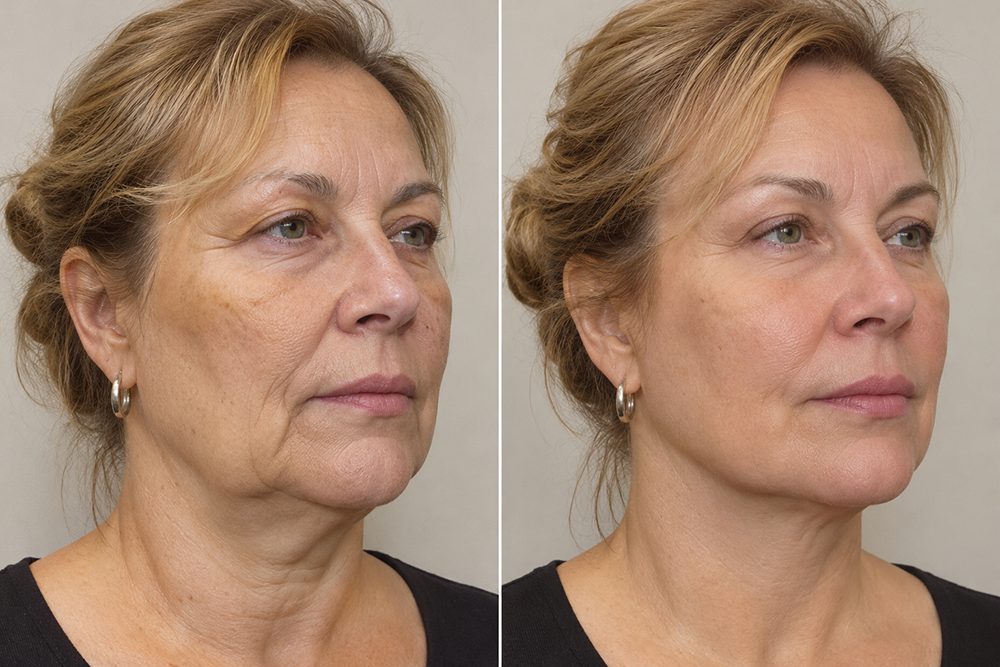
The world of aesthetic medicine is changing. Today, more patients are looking for facial rejuvenation treatments that help them look refreshed without dramatically changing their appearance.
Instead of pursuing exaggerated lifting or overly tight facial contours, the growing emphasis is on subtle improvements, natural facial movement, and treatments tailored to individual anatomy.
One procedure attracting attention in this evolving field is the thread lift, a minimally invasive technique designed to reposition selected facial tissues and improve the appearance of mild to moderate skin laxity.
But how has thread lifting evolved, and what makes today's techniques different from those used just a few years ago?
At Beauty in LA in Reseda, California, we believe understanding the latest developments helps patients make informed decisions about their aesthetic goals.
Let's explore the most important thread lift trends shaping facial rejuvenation in 2026.
1Natural-Looking Results Are Becoming the Priority
One of the most important changes in modern facial rejuvenation is the growing emphasis on preserving natural facial characteristics.
Patients increasingly want to look rested, refreshed, and confident rather than noticeably altered.
For thread lifting, this means focusing on balanced facial contours instead of attempting to create an excessively tight appearance.
A carefully planned thread lift may help improve:
- Mild jowling along the lower face
- Early changes in jawline definition
- Selected areas of cheek descent
- Mild tissue laxity
- Overall facial contour balance
The goal is not to create an entirely different facial structure.
Instead, treatment should respect the patient's existing features, facial proportions, and natural expressions.
This approach is particularly relevant for patients seeking subtle facial rejuvenation without traditional facelift surgery.
2Modern Thread Materials Offer More Treatment Options
Thread lifting has evolved beyond a single type of thread.
Today, aesthetic practitioners may use different absorbable materials, each with distinct physical properties and absorption characteristics.
PDO Threads
Polydioxanone (PDO) threads are among the most widely recognized materials used in aesthetic thread procedures.
Depending on their design, PDO threads may be used for tissue support or certain skin-remodeling applications.
Barbed PDO threads can provide mechanical engagement with selected tissues, while smooth threads are generally not intended to produce the same lifting effect.
PLLA Threads
Poly-L-lactic acid (PLLA) is another absorbable material used in certain thread-lifting systems.
PLLA-based threads may provide mechanical support and stimulate a localized tissue response as the material gradually breaks down.
PCL Threads
Polycaprolactone (PCL) threads have attracted interest because of their different flexibility and absorption characteristics.
Some PCL materials remain in tissue longer than PDO materials, although this does not automatically mean that visible lifting results last longer.
Why Thread Selection Matters
The most appropriate material depends on several factors, including:
- Facial anatomy
- Skin thickness and elasticity
- Degree of tissue descent
- Treatment area
- Thread design
- Individual treatment goals
The newest material is not necessarily the best choice for every patient.
An experienced medical provider must consider how each thread system interacts with the patient's facial structure.
3Personalized Lifting Vectors Are Changing Treatment Planning
Modern thread lifting increasingly emphasizes individualized placement rather than standardized techniques.
A lifting vector describes the direction in which tissue is repositioned.
Different facial areas require different approaches because the cheeks, jawline, and lower face have distinct anatomical characteristics.
For example, a patient experiencing early jowling may require a different treatment strategy from someone concerned about mild cheek descent.
Careful planning considers facial proportions, tissue mobility, skin quality, and the location of important anatomical structures.
The objective is to achieve a balanced result without creating unnatural tension or distortion.
Recent research into thread-lifting practice also suggests that thread material selection and procedural planning are becoming increasingly individualized.
4The Rise of Combination Facial Rejuvenation
Another significant trend is the use of thread lifting within broader facial rejuvenation plans.
A large multicenter study published in 2025 examined more than 110,000 facial thread-lifting procedures performed between 2020 and 2024.
Researchers observed that thread lifting was frequently combined with other aesthetic treatments.
This reflects an important principle: facial aging is not caused by a single factor.
It involves changes in skin texture, elasticity, facial fat, supporting structures, and tissue position.
Because these changes are different, one procedure cannot address every concern.
Where Does Morpheus8 Fit In?
For patients concerned about skin quality, Morpheus8 may be worth discussing as a separate treatment option.
Morpheus8 combines radiofrequency energy with microneedling to support tissue remodeling and improve certain aspects of skin texture and firmness.
Thread lifting and Morpheus8 address different aesthetic concerns.
A thread lift may provide modest tissue repositioning, while Morpheus8 primarily focuses on skin and tissue remodeling.
However, combining procedures is not automatically beneficial or appropriate. Treatment sequencing, healing time, skin condition, and facial volume must all be considered.
Patients with significant facial hollowing require particular care when evaluating energy-based treatments.
At Beauty in LA, individualized consultation helps determine which available treatments may be appropriate for a patient's goals.
5Preventative Aesthetics and Earlier Facial Changes
Another trend in aesthetic medicine is growing interest in addressing early signs of facial aging before they become more pronounced.
Patients in their 30s and 40s may begin noticing subtle changes around the cheeks, jawline, or lower face.
These changes can be influenced by genetics, weight fluctuations, sun exposure, and natural aging.
However, being younger does not automatically make someone a good candidate for thread lifting.
Some patients may benefit more from skincare, sun protection, or other treatments. Others may not require a procedure at all.
The appropriate decision depends on the degree of tissue laxity and the patient's expectations.
A thread lift should not be presented as a guaranteed way to prevent future facial aging.
Instead, it is one possible treatment for selected existing concerns.
6What Does the Latest Research Say About Thread Lift Results?
As thread lifting becomes more widely discussed, patients are also asking more informed questions about effectiveness and longevity.
A 2025 systematic review published in Dermatologic Surgery examined studies involving absorbable facial thread lifts.
The review found that appropriately selected patients could experience visible improvements following treatment.
However, researchers also emphasized that reliable long-term effectiveness data remain limited.
More recent expert recommendations suggest that the visible lifting effect is generally temporary, often diminishing within approximately 6–12 months.
Individual results can vary depending on the technique, material, anatomy, and healing response.
A thread may remain in tissue for a certain period, but that does not guarantee that the initial lifting effect will remain equally visible throughout that time.
Patients should be cautious of promises involving permanent lifting or results equivalent to surgical facelifts.
7Safety and Patient Selection Are More Important Than Ever
Advances in thread materials and techniques do not eliminate the risks associated with treatment.
Thread lifting remains a medical procedure.
- Temporary swelling or bruising
- Tenderness and discomfort
- Skin dimpling or irregularities
- Facial asymmetry
- Visible or palpable threads
- Infection
- Thread migration or extrusion
Some complications may require additional medical treatment or thread removal.
Careful patient selection, appropriate anatomical knowledge, sterile technique, and realistic expectations are essential.
Patients with substantial skin laxity may be better served by discussing surgical options rather than expecting a minimally invasive procedure to produce dramatic lifting.
The safest treatment plan is not necessarily the one involving the greatest number of threads.
It is the one based on the patient's anatomy, medical history, and treatment goals.
8Thread Lift vs. Surgical Facelift: What Has Changed?
Despite improvements in minimally invasive procedures, thread lifting has not replaced traditional facelift surgery.
The two approaches serve different purposes.
A surgical facelift can reposition deeper facial structures and address more advanced tissue laxity. Its results are generally more substantial and longer-lasting.
A thread lift offers a less invasive option for selected patients seeking modest improvements.
Thread lifting may appeal to patients who:
- Have mild to moderate facial laxity
- Prefer a less invasive procedure
- Want subtle rather than dramatic changes
- Understand that results are temporary
- Have realistic expectations about recovery and outcomes
Neither procedure is universally better.
The most appropriate choice depends on the degree of correction needed and the patient's individual priorities.
9What Should Patients Ask Before Choosing a Thread Lift in 2026?
As new technologies and treatment techniques become available, informed decision-making is increasingly important.
Before undergoing a thread lift, consider asking your provider:
- Am I a suitable candidate based on my facial anatomy?
- Which thread material and design would be used?
- What degree of improvement is realistic?
- How long might the visible lifting effect last?
- What complications should I understand?
- How much recovery time should I plan for?
- Would another treatment better address my concerns?
These questions can help distinguish meaningful medical guidance from marketing claims.
A thoughtful consultation should explain both the potential benefits and the limitations of the procedure.
Modern Thread Lift Consultations in Reseda, Los Angeles
At Beauty in LA, patients can explore personalized facial rejuvenation options with Dr. Aram Mkhitarian, D.O.
Located in Reseda, California, Beauty in LA welcomes patients from Encino, Tarzana, Woodland Hills, Northridge, Sherman Oaks, Chatsworth, Van Nuys, Calabasas, West Hills, and surrounding San Fernando Valley communities.
Whether your primary concern is early jowling, reduced jawline definition, or changes in facial firmness, an individualized consultation can help clarify which treatment options may be suitable.
Our goal is to support informed decisions and natural-looking aesthetic outcomes.
For additional information about the procedure itself, visit our Thread Lift in Los Angeles service page.
Frequently Asked Questions About Thread Lift Trends in 2026
Are PDO thread lifts still popular in 2026?
Are newer thread materials better than traditional PDO threads?
Can a thread lift create a natural-looking jawline?
How long do modern thread lifts last?
Can thread lifting replace facelift surgery?
Is thread lifting appropriate after significant weight loss?
The most meaningful evolution in thread lifting is not simply the introduction of new materials or techniques.
It is the growing emphasis on individualized treatment planning, natural facial proportions, patient safety, and realistic expectations.
As aesthetic medicine continues to develop, patients have more opportunities to learn about minimally invasive facial rejuvenation. But innovation should always be evaluated alongside scientific evidence.
At Beauty in LA in Reseda, CA, we believe the best aesthetic decisions begin with education and an understanding of each patient's unique needs.
Interested in learning whether a thread lift may be right for you? Schedule a personalized consultation with Beauty in LA.